 how-to
Is Air Duct Cleaning Really Necessary? A Homeowner's Guide
Table of Contents
- Is Air Duct Cleaning Really Necessary? The Short Answer
- What Routine Duct Cleaning Actually Does (and Doesn't Do)
- Signs Air Ducts Need Cleaning: A Room-by-Room Inspection Checklist
- EPA Air Duct Cleaning Recommendations: What the Agency Actually Says
- Situations That Justify Professional Cleaning
- How Often to Clean Air Ducts: A Practical Schedule
- Air Duct Cleaning Scams: Warning Signs and High-Pressure Sales Tactics
- Cleaning vs. Repairing, Sealing, or Replacing Ductwork
- What to Do Before and After a Duct Cleaning Visit
- Frequently Asked Questions
Last Updated: October 21, 2026
Is Air Duct Cleaning Really Necessary? The Short Answer
Most homes do not need routine air duct cleaning. That is the honest answer, and it is the one the U.S. Environmental Protection Agency's guidance on air duct cleaning gives as well.
But "no" is not the same as "never."
At Wilson Carpet & Air Duct Cleaning, LLC, homeowners ask us this constantly, unsure whether they are being sold something they need.
Below, we walk through when air duct cleaning is truly necessary, how to check your own system, and how to spot a bad provider.
What Routine Duct Cleaning Actually Does (and Doesn't Do)
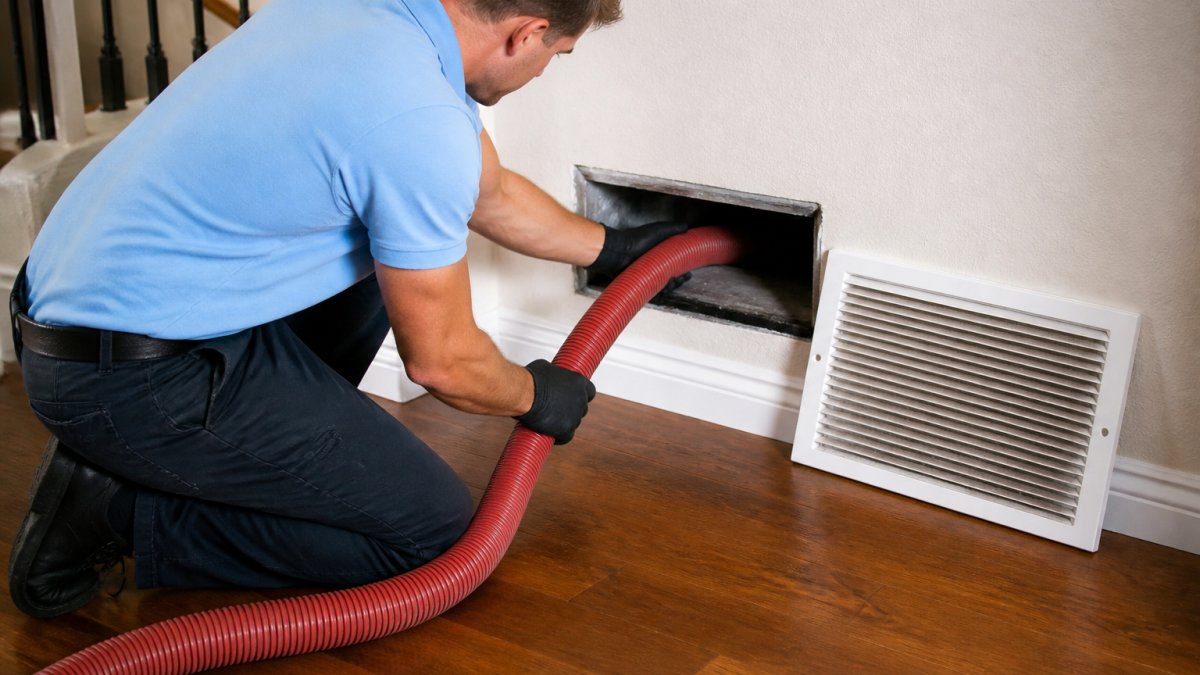
Routine duct cleaning removes dust and debris from inside the ductwork. It does not fix allergies, lower energy bills, or make your home healthier on its own.
That is where marketing gets ahead of the facts. A common claim is that cleaning boosts airflow and cuts energy costs, but most homes already have plenty of airflow. The real limit on efficiency is usually a clogged filter or failing blower, not dirty ducts.
What cleaning does well:
- Removes built-up dust, pet hair, and construction debris
- Clears visible mold and its food source
- Removes pest droppings and nesting material
- Cleans up after fire, flood, or renovation work
What it does not do:
- Cure asthma or allergies
- Guarantee lower utility bills
- Replace a proper filter change schedule
Signs Air Ducts Need Cleaning: A Room-by-Room Inspection Checklist
Real signs of a duct problem show up in specific places. Walk your home with a flashlight, step stool, and phone camera.
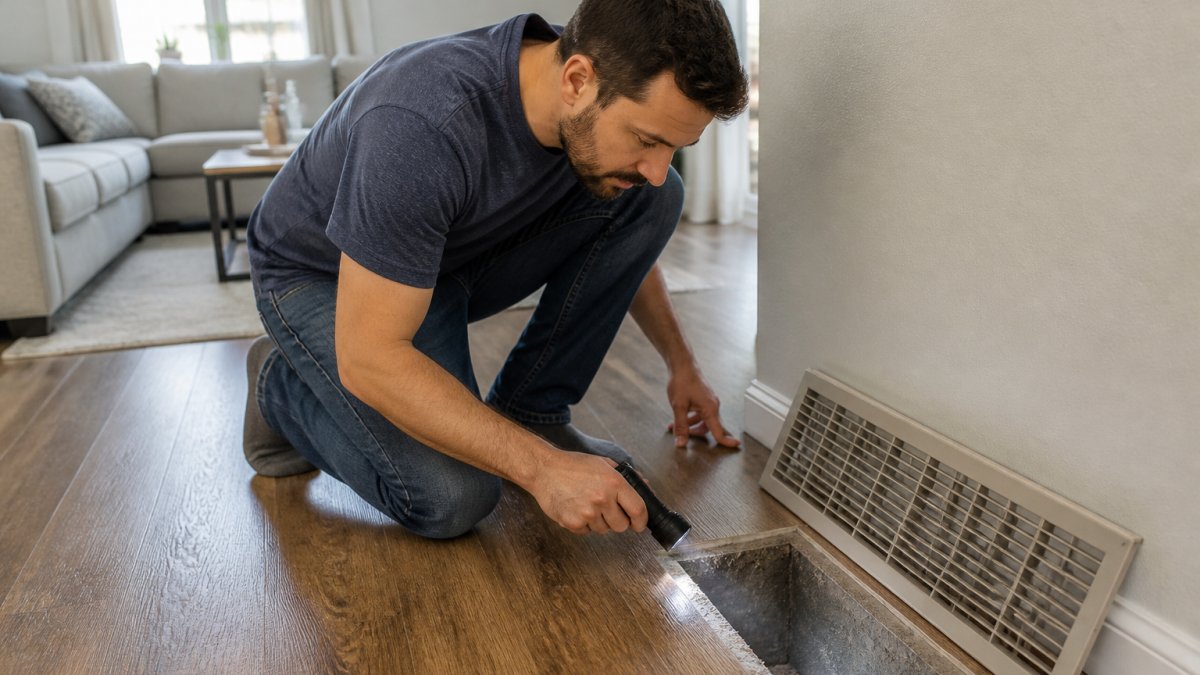
Use this checklist:
- Supply vents: Pop off a few registers and shine a light inside. A thin, even film of dust is normal. Thick, matted debris, visible clumps, or debris that falls out when you tap the boot is not.
- Return ducts: Check the large grille. Heavy dust around the edges and a dark, fuzzy coating on the grille face point to a bigger buildup inside. Remove the grille and photograph the interior with your phone flash.
- Air handler closet: Look for dust streaks on the cabinet, moisture or rust on the unit, and a filter that is collapsed, bypassing, or caked solid. A filter unchanged for months is a more common cause of poor airflow than dirty ducts.
- Bathrooms and kitchen: Check nearby vents for moisture staining and grease film. A bathroom exhaust that vents into the attic rather than outdoors is a separate problem cleaning will not fix.
- Basement or attic: Look for rodent droppings, nesting material, torn duct insulation, disconnected flex duct, and standing water or damp insulation. Photograph anything you find.
How to Verify Mold, Contamination, or a Real Blockage
Seeing something suspicious is not the same as confirming a problem. Before paying for cleaning, separate what visible evidence can prove from what it cannot.
Mold. Dark spotting on duct lining, around registers, or on the air handler cabinet, paired with a musty odor, is a reasonable trigger to investigate.
A real blockage. A true blockage measurably reduces airflow, not just visible dust.
Contamination. Check the blower wheel and evaporator coil.
If your inspection turns up mold, pest evidence, standing moisture, or a confirmed blockage, move to the next section. If it turns up only light dust and a dirty filter, replace the filter and recheck in a few weeks before spending money on cleaning.
EPA Air Duct Cleaning Recommendations: What the Agency Actually Says
The EPA does not recommend routine duct cleaning (the EPA). It advises cleaning only when a specific problem exists, such as mold, vermin, or heavy debris.
That is the key point most sales pitches skip.
The EPA does say that if a service provider claims to clean your ducts for health reasons, they should be able to show you objective evidence.
A few more points from the agency:
- Dirty ducts are not automatically a health hazard
- Research on duct cleaning's health effects is still limited
- Providers should follow accepted industry standards
Situations That Justify Professional Cleaning
Some problems do call for a pro, cases where cleaning moves from optional to sensible.
Visible Mold, Rodent or Insect Infestation, and Fire or Flood Damage
Visible mold inside the ductwork is a clear trigger. Mold needs moisture, so cleaning only helps if you also fix the water source.
Rodent or insect infestation is another. Droppings, nesting material, and dead pests inside ducts are a contamination problem, not just dust.
Fire and flood damage both leave residue: smoke leaves soot, and water damage can feed mold.
Also consider cleaning if:
- You just finished a major renovation and debris got into the system
- Ducts are clogged or restricted by heavy debris
- A duct has been damaged and needs repair
How Often to Clean Air Ducts: A Practical Schedule
There is no set schedule for every home. Most homes can go many years without cleaning if the system stays dry and filters are changed on time.
A practical approach:
- Healthy home, no issues: clean only if you see signs, roughly every 5 to 10 years at most
- Pets or heavy dust: inspect every 2 to 3 years
- Recent renovation: clean once debris settles
- Mold, pests, or water damage: clean right away, then fix the cause
Filter replacement matters more than duct cleaning. Change standard filters every 1 to 3 months. High-quality filters help too, and we offer high-quality air filter installation.
Air Duct Cleaning Scams: Warning Signs and High-Pressure Sales Tactics
The duct cleaning industry has a scam problem, and the EPA has flagged it. Some outfits advertise a cheap "whole house special," then push add-ons on arrival. Others wipe the registers and call it duct cleaning. Knowing what a legitimate quote contains is your best defense.
Watch for these red flags:
- A price that sounds too good to be true, especially a flat "whole house" rate advertised without an inspection
- No written estimate before work starts
- Pressure to add services on the spot, or a price that climbs after the crew arrives
- Claims that your ducts are a health hazard with no proof
- No before-and-after photos
What a Written Estimate and Before-and-After Evidence Should Include
A real estimate lists the scope in plain terms and prices each part. Ask for it in writing before anyone touches your system, and compare quotes line by line, not just on the bottom line.
A complete quote should state:
- Vent and return count: how many supply registers and return grilles are included, and the charge for each additional one. This is the most common source of surprise charges.
- Air handler and coil: whether the blower and evaporator coil are cleaned, and whether that is included or an add-on. Coil cleaning is often priced separately.
- Cleaning method and equipment: source removal using negative pressure (a vacuum connected to the system) plus agitation (brushes or air whips) is the accepted approach. A quote that does not mention equipment or method is a warning sign.
- Disinfection or sanitizing: whether it is included, optional, or not recommended. Sanitizing does not substitute for removing the contamination.
- Access and repair: whether the price includes cutting access holes and sealing them afterward, and what happens if a duct is damaged or disconnected during cleaning.
Typical quotes vary widely by region, home size, and system complexity, so treat any single number with caution.
For proof of work, ask for dated before-and-after photos of the duct interiors and air handler.
Cleaning vs. Repairing, Sealing, or Replacing Ductwork
Cleaning is not always the right fix. Sometimes ducts need repair, sealing, or replacement instead.
- Clean when the problem is debris, mold, or pests inside sound ductwork.
- Repair when ducts are crushed, disconnected, or torn.
- Seal when leaks are wasting air in attics or crawl spaces.
- Replace when ductwork is badly damaged or the wrong size for the system.
A common mistake is paying for cleaning when the real issue is a leaky or disconnected duct. Get an inspection first, and ask the provider which fix you actually need.
What to Do Before and After a Duct Cleaning Visit
A little prep makes the visit smoother.
Before the visit:
- Clear space around vents and the air handler
- Note any rooms with weak airflow
- Ask for the written estimate and scope
- Confirm what the price includes
After the visit:
- Ask for before-and-after photos
- Check that all vents are back in place
- Replace the filter
- Watch for the same smells or airflow issues returning
If problems come back, that points to an unfixed cause, not a bad cleaning.
Frequently Asked Questions
What are the downsides to air duct cleaning?
The main downsides are cost without guaranteed benefit, disruption to your home during service, and the risk of hiring an unqualified provider who uses weak vacuum equipment or leaves debris behind. Routine air duct cleaning on a system with no contamination rarely improves airflow or energy efficiency measurably. Poorly done cleaning can also stir up dust and temporarily worsen indoor air quality. That is why the decision should rest on evidence like visible mold, infestation, or heavy debris, not on a sales pitch or a calendar reminder.
Can dirty air ducts make you sick?
Contaminated ductwork can circulate dust, mold spores, and allergens through your heating and cooling system, and some people with allergies or respiratory symptoms notice improvement after source removal. The evidence is not strong enough to claim duct cleaning cures health problems, though. If mold growth or rodent infestation is present, the contamination itself is a legitimate concern regardless of symptoms. Talk to a doctor about respiratory symptoms and treat duct cleaning as one part of indoor air quality management alongside air filters and moisture control.
Is it worth cleaning ducts when you buy a house?
It depends on what the inspection shows. A home inspection that reveals visible mold, pest activity, heavy debris, or a neglected system is a reasonable trigger. If the ducts look clean and the previous owners maintained filter replacement, there is no automatic need. Ask for service records, look inside a few registers yourself, and get a written estimate before committing. Buying a house is a good moment to inspect ductwork, not a reason to clean it blindly.
How do I know if my air ducts need cleaning?
Check for the signs that justify service: visible mold inside ductwork or on the air handler, rodent droppings or insect activity, ducts clogged with debris that restricts airflow, and fire or water damage. Also watch for excessive dust around supply vents and registers after filter replacement. If none of those are present and your HVAC system runs normally, routine cleaning is generally not necessary. A professional inspection with photos of the duct interior gives you a factual basis for the decision.
Duct cleaning is not a routine purchase, and treating it like one is how homeowners get burned. The real question is whether your system has a specific problem worth fixing. If it does, we can help. Wilson Carpet & Air Duct Cleaning, LLC offers advanced air duct cleaning and disinfecting, indoor air quality testing, and high-quality air filter installation, with 0% financing options available. Call us today to schedule an inspection and get a straight answer on what your ducts actually need.