 listicle
8 Signs Your Dryer Vent Needs Cleaning Now
Last Updated: October 23, 2026
Quick Summary
Signs your dryer vent needs cleaning include clothes taking longer than usual to dry, laundry staying damp after a full cycle, and a dryer or clothes that feel unusually hot. A burning or musty smell, rising energy bills, a dryer that shuts off or fails to heat, lint around the dryer or exterior vent, and a vent flap that won't open properly are also warning signs.
- Clean the lint trap before every load and have the vent professionally cleaned regularly.
- Stop using the dryer if the body or clothes are hot to the touch, and arrange an inspection.
- Do the exterior flap test with the dryer running to check for steady, strong airflow.
- Average homes with 1-2 loads weekly should get vent cleaning once a year.
- Homes with long duct runs, daily loads, or shedding pets need cleaning every 6-9 months.
Table of Contents
- Why a Clogged Dryer Vent Is a Safety Issue, Not Just a Nuisance
- 8 Warning Signs Your Dryer Vent Needs Cleaning
- 1. Clothes Take Longer Than Usual to Dry
- 2. Laundry Stays Damp After a Full Cycle
- 3. The Dryer or Clothes Feel Unusually Hot
- 4. You Notice a Burning or Musty Smell
- 5. Energy Bills Climb Without a Clear Reason
- 6. The Dryer Shuts Off or Fails to Heat
- 7. Lint Collects Around the Dryer or Exterior Vent
- 8. The Exterior Vent Flap Won't Open Properly
- Clogged Dryer Vent Symptoms You Can Check Yourself
- Is Your Dryer Taking Too Long to Dry? When It's the Appliance, Not the Vent
- How Often to Clean a Dryer Vent: A Frequency Guide
- What the Dryer Vent Cleaning Process Includes
- Vent Design and Installation Problems That Cause Clogs
- Frequently Asked Questions
Why a Clogged Dryer Vent Is a Safety Issue, Not Just a Nuisance
A clogged dryer vent is a fire hazard before it ever becomes a laundry annoyance. According to the U.S. Fire Administration, dryers are involved in thousands of residential fires each year, and failure to clean the vent is a leading contributing factor.
At Wilson Carpet & Air Duct Cleaning, LLC, we see the same pattern in home after home: the dryer still runs, the clothes still come out mostly dry, so nobody thinks twice. The National Fire Protection Association recommends cleaning dryer vents regularly to reduce that risk, and the U.S. Consumer Product Safety Commission points to lint buildup as a primary cause of dryer fires.
The signs your dryer vent needs cleaning are usually visible weeks before anything dangerous happens. You just have to know what to look for. Below, we walk through the eight warning signs, the checks you can safely do yourself, and how often a vent actually needs professional attention.
8 Warning Signs Your Dryer Vent Needs Cleaning
Most homeowners miss the early clues because they look like ordinary appliance quirks. Here are the eight signals that matter, in the order they typically show up.
1. Clothes Take Longer Than Usual to Dry
A load that once finished in 40 minutes now needs an hour or more. That extra time is the most common early sign of a clogged vent. Restricted airflow means moist air can't escape, so the drum keeps tumbling wet clothes in humid air. If your dryer is taking too long to dry and nothing about your laundry habits has changed, check the vent before you blame the machine.
2. Laundry Stays Damp After a Full Cycle
Clothes that come out cool and damp after a complete cycle point to the same problem: moisture has nowhere to go. A partially blocked vent traps humid air inside the drum. One damp load can be a fluke. Two or three in a row is a pattern worth investigating.
3. The Dryer or Clothes Feel Unusually Hot
Touch the dryer exterior after a cycle. A machine that feels hot to the touch, or clothes that are too hot to handle, signals overheating. This is where a nuisance becomes a fire risk. High temperatures combined with lint buildup are exactly the conditions that start vent fires.
4. You Notice a Burning or Musty Smell
A burning smell means heat is reaching lint somewhere in the system. Stop the dryer, unplug it, and do not run another cycle until the vent is inspected. A musty or mildew odor is a different signal: moisture is trapped in the duct, and mildew is growing there. Both odors mean the vent needs attention now, not next month.
5. Energy Bills Climb Without a Clear Reason
A clogged vent forces the dryer to run longer, and a longer drying cycle means more energy consumption. If your energy bills are creeping up and the dryer is the only appliance running more often, the vent is a likely culprit. You're paying for heat that isn't reaching your clothes efficiently.
6. The Dryer Shuts Off or Fails to Heat
Modern dryers have safety limits. When internal temperatures climb too high because airflow is restricted, the dryer may shut off mid-cycle or stop heating altogether. A dryer that won't heat is often not a broken heating element. It's the machine protecting itself from a vent blockage.
7. Lint Collects Around the Dryer or Exterior Vent
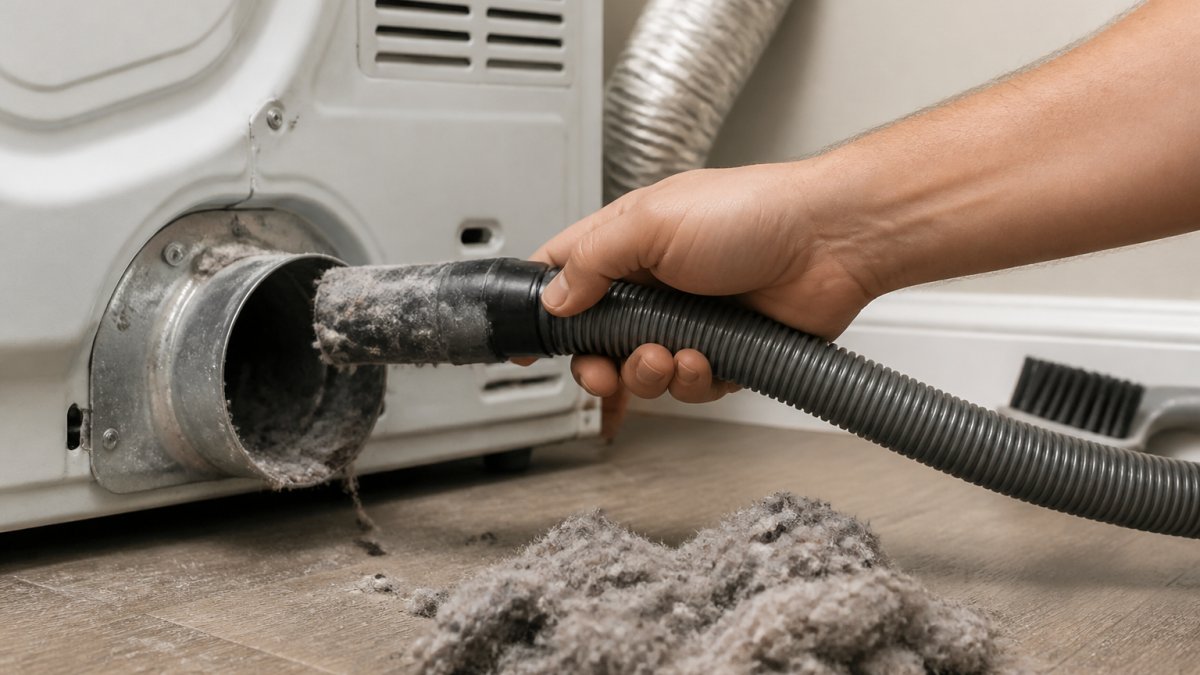
Visible lint behind the dryer, around the lint trap housing, or near the outside vent flap is lint that escaped the trap and settled in the duct. Lint debris around the exterior vent opening is one of the clearest signs your dryer vent needs cleaning, because it means lint is making it all the way through the system and collecting at the exit.
8. The Exterior Vent Flap Won't Open Properly
Go outside and watch the vent hood while the dryer runs. The flap should open freely and air should push out steadily. A flap that stays shut, flutters weakly, or doesn't move at all means the vent opening is blocked. This is the single easiest check a homeowner can do, and it tells you a lot.
Clogged Dryer Vent Symptoms You Can Check Yourself
You can confirm most clogged dryer vent symptoms without tools, a ladder, or touching a single screw.
The exterior flap test. With the dryer running on a timed heat cycle, go outside and watch the vent hood.
The lint trap housing check. Pull the lint screen and shine a flashlight down into the housing.
The empty-load airflow test. Run the dryer on air-only (no heat) for a few minutes with an empty drum and feel the exhaust outside.
The heat check. After a normal cycle, touch the dryer body and the clothes.
- Exterior flap opens freely with strong airflow
- No crushed or kinked duct behind the dryer
- Lint trap housing clear below the screen
- No visible lint around the vent opening
- Dryer exterior stays cool during a cycle
- Empty-load exhaust feels strong and steady
Is Your Dryer Taking Too Long to Dry? When It's the Appliance, Not the Vent
A dryer taking too long to dry is not always a vent problem.
Thermostat or thermal fuse. A thermostat that reads low keeps the dryer from reaching temperature; a blown thermal fuse shuts off heat entirely.
Clogged lint screen or housing. A screen coated with fabric softener residue or a housing packed with lint restricts airflow inside the machine.
Here is the practical split in one line: strong airflow at the exterior vent plus a slow dryer means appliance; weak airflow means vent.
How Often to Clean a Dryer Vent: A Frequency Guide
How often to clean a dryer vent depends on your household, not a single calendar rule. The U.S. Fire Administration advises cleaning the lint trap before every load and having the vent professionally cleaned regularly. Use this guide:
| Household Situation | Recommended Vent Cleaning |
|---|---|
| Average home, 1-2 loads weekly | Once a year |
| Large family, daily loads | Every 6-9 months |
| Long or complex duct run | Every 6 months |
| Pets in the home (heavy lint) | Every 6 months |
| Vacation rental or multi-unit property | Before each turnover season |
Annual cleaning is the baseline for most homes. Homes with heavy use, long duct runs, or shedding pets need it more often. If you've ever asked whether last year's cleaning is still good, the honest answer is: check the flap. It will tell you.
What the Dryer Vent Cleaning Process Includes
A professional dryer vent cleaning process goes further than a homeowner can reach.
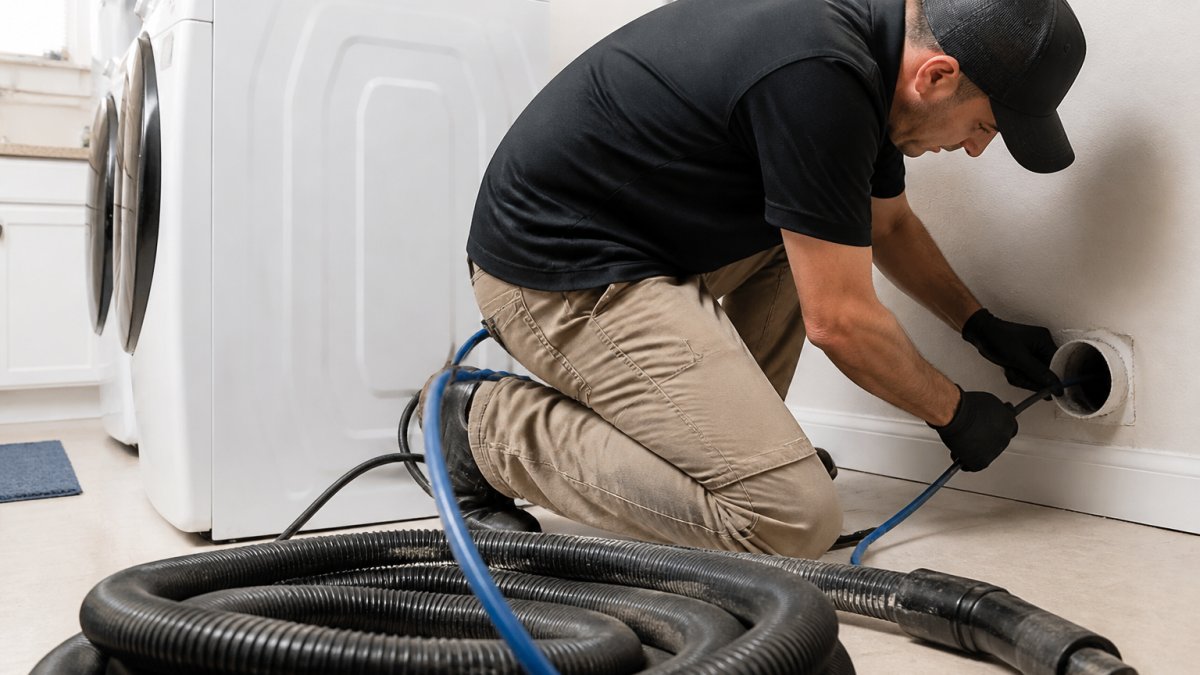
At Wilson Carpet & Air Duct Cleaning, LLC, our dryer vent service includes checking the duct routing and flagging installation problems that cause repeat clogs.
Vent Design and Installation Problems That Cause Clogs
Some vents clog fast no matter how often you clean them, and the duct design is usually why. Flexible foil or vinyl duct with ridges traps lint at every fold. Long runs with multiple elbows slow airflow and give lint more places to settle. A vent that terminates in the roof instead of a side wall is harder to inspect and easier to neglect.
The fix isn't always more cleaning. Sometimes it's rerouting the duct to a shorter, smoother path with a proper exterior vent hood. If your vent clogs every few months, ask a technician to look at the installation, not just the lint.
Frequently Asked Questions
How often should you clean a dryer vent?
Most households should clean the dryer vent at least once a year. Clean more often, every six to nine months, if you run several loads a week, have a large family, or own a pet that sheds. Homes with long duct runs or vents with multiple elbows need more frequent attention because lint collects faster in those configurations. If you notice any of the warning signs above, such as longer drying times or a hot dryer exterior, schedule cleaning sooner rather than waiting for the annual mark.
What are the most common clogged dryer vent symptoms?
The clearest clogged dryer vent symptoms are clothes that need two or more cycles to dry, laundry that stays damp, a dryer exterior that feels hot to the touch, and a burning or musty smell in the laundry room. You may also see lint collecting around the vent opening or notice the outside flap no longer opening fully. Any one of these is a reason to inspect the vent. Two or more together point to a real blockage that should be cleared by a professional.
Can a clogged dryer vent make a dryer overheat?
Yes. When lint buildup restricts airflow, heat has nowhere to go and stays trapped in the dryer and duct. That trapped heat raises the fire risk, which is why dryer vent fires are a documented hazard. A dryer that feels unusually hot on top or produces a burning smell is a signal to stop using it until the vent is checked. Clearing the blockage restores airflow and lets the dryer run at normal temperatures again.
How much does professional dryer vent cleaning cost?
Pricing depends on duct length, vent location, how much buildup is present, and whether the technician needs special equipment for a roof vent. Because every home is different, the most accurate way to get a number is to request a quote based on your setup. Wilson Carpet & Air Duct Cleaning, LLC provides quotes for dryer vent cleaning and maintenance, so you know the cost before any work begins.
A dryer that runs hot, takes two cycles to dry a load, or leaves lint around the outside vent is telling you something. Don't wait for the burning smell to act. Wilson Carpet & Air Duct Cleaning, LLC provides professional dryer vent cleaning and maintenance, advanced air duct cleaning and disinfecting, and indoor air quality testing to keep your home safe and your dryer running efficiently. Call us today to schedule an inspection and get a clear answer on your vent.