 How-to
How to Check a Dryer Vent for a Blockage Safely
Last Updated: November 19, 2026
Quick Summary
To check a dryer vent for a blockage safely, run the dryer on a heated cycle for ten minutes, then go outside and watch the exterior flap while holding a piece of paper near the vent hood. A flap that barely lifts or weak airflow points to a restriction, so stop and unplug the dryer if you smell burning.
- Slow drying, extra heat, and a burning smell are warning signs of a clogged vent.
- Clear visible leaves and lint from the outside vent hood by hand while wearing gloves.
- Never climb onto a roof or use a ladder to reach a roof-terminated vent.
- A crushed transition duct behind the dryer can drop airflow even when the vent is clean.
- Stop and call a professional when the vent runs through the roof or stays blocked.
Table of Contents
- Signs of a Clogged Dryer Vent You Should Never Ignore
- How to Test Dryer Vent Airflow Safely
- Cleaning a Dryer Vent From Outside Before You Open Anything Up
- How to Clean a Dryer Vent Without Moving the Dryer
- When to Stop and Call a Professional
- Book a Dryer Vent Inspection With Wilson Carpet & Air Duct Cleaning, LLC
- Frequently Asked Questions
Signs of a Clogged Dryer Vent You Should Never Ignore
A clogged dryer vent shows up as slow drying, extra heat, or a burning smell, and any one of those means you should stop and check the vent before running another load. At Wilson Carpet & Air Duct Cleaning, LLC, we see these warning signs in laundry rooms in our service area. Learning how to check a dryer vent for a blockage safely starts with knowing what a blocked vent looks like before you touch a single hose.
Here is what to watch for:
- Clothes take two cycles to dry
- The dryer feels hot to the touch
- A musty or burning smell fills the laundry room
Longer Drying Times and Wet Clothes
Slow drying is the most common sign of a clogged vent. If a normal load used to finish in one cycle and now needs two, airflow is restricted somewhere in the exhaust duct. The dryer keeps heating, but moist air cannot escape, so clothes stay damp. For a closer look at why cycles stretch out, read our guide on why dryers take so long to dry.
Excess Heat, Burning Smells, and Fire Risk
Heat that builds up in a clogged vent has nowhere to go. That trapped heat and lint is a real fire hazard, not a minor annoyance. If you smell something burning, stop the dryer, unplug it, and do not run it again until the vent is checked. Lint is highly flammable, and a clogged dryer vent is one of the leading causes of home dryer fires according to the U.S.
How to Test Dryer Vent Airflow Safely
You can test dryer vent airflow safely with two checks that take minutes and require no tools: the outside flap test and a before-and-after dryer run. Do both before you disconnect anything, and stop immediately if you smell burning or see scorch marks, unplug the dryer and do not run it again until the vent is inspected.
Follow these steps:
- Clear the lint screen and confirm the lint trap housing is empty.
- Run the dryer on a normal heated cycle for ten minutes with a typical load.
- Go outside and watch the exterior flap while the dryer runs.
- Hold a piece of paper near the vent hood and see if it flutters or is pushed away.
- Note how warm and damp the exhaust air feels, and time how long the load takes.
- Compare results before and after any cleaning.
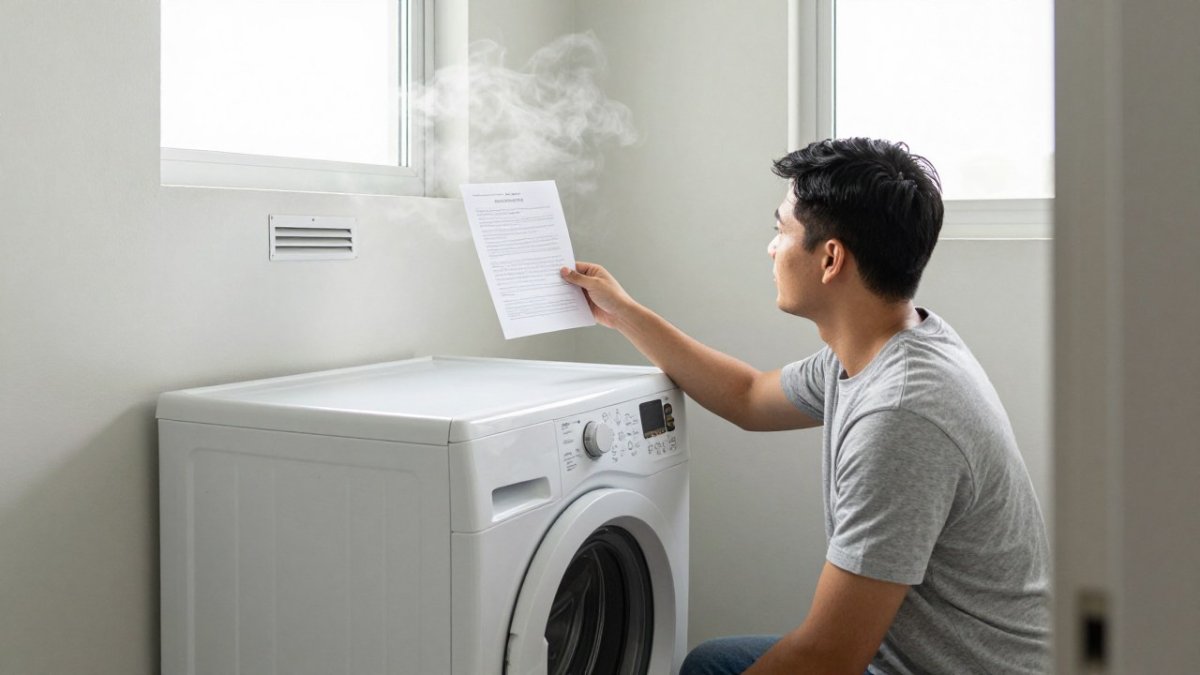
The Outside Vent Hood and Exterior Flap Check
The outside vent hood tells you a lot for free. A flap that stays shut, or barely lifts, points to restricted airflow. Leaves, lint, or an animal nest can block the exterior flap. Clear any visible obstruction from the outside first, since this is often a quick, free fix.
If you see evidence of a nest or animal, stop and call a professional rather than trying to remove it yourself.
The Dryer Before-and-After Test Run
The before-and-after test run confirms whether cleaning worked. Run one load, time it, and feel the exhaust. Then clean the vent and repeat. Better airflow and faster drying mean the job is done. If nothing changes, the blockage is deeper in the ductwork or the problem is not the vent at all.
How to Interpret What You Find
A simple hand or paper test is indicative, not a calibrated measurement. Use these patterns to decide your next step:
- Strong, steady airflow and a flap that lifts fully: the vent is likely clear; if clothes still take two cycles, look at the lint screen, load size, or the dryer itself.
- Weak or intermittent airflow, flap barely moving: restriction somewhere in the run, start with the exterior hood, then the transition duct behind the dryer.
- No airflow at all: a full blockage, a disconnected duct, or a vent route that terminates somewhere you have not found. Stop using the dryer until it is resolved.
A common pattern is a crushed transition duct behind the dryer, the short flexible section between the appliance and the wall. If it is kinked or smashed against the wall, airflow drops even when the rest of the vent is clean. Straighten or replace it before assuming the wall run is blocked.
Distinguishing a Vent Blockage From Other Dryer Problems
Not every slow dryer is a vent problem. Before you open ductwork, rule out these look-alikes:
- A clogged lint screen or trap housing: the cheapest fix and the most common cause of long dry times.
- An overloaded or oversized load: bulky items like comforters trap moisture and need more time.
- A crushed or disconnected transition duct: airflow escapes into the laundry room instead of outside.
If the exterior airflow test is strong and the lint screen is clean, the vent is probably not your problem, and no amount of brushing will fix an appliance fault.
Use these airflow patterns to decide whether the vent is clear or needs attention.
| What you observe | What it likely means | Next step |
|---|---|---|
| Strong, steady airflow and flap lifts fully | Vent likely clear | Check lint screen, load size, or dryer itself |
| Weak or intermittent airflow, flap barely moving | Restriction somewhere in the run | Start with exterior hood, then transition duct |
| No airflow at all | Full blockage or disconnected duct | Stop using the dryer until resolved |
| Warm, damp air with musty smell | Lint and moisture trapped | Clean full run and check for crushed flex duct |
Cleaning a Dryer Vent From Outside Before You Open Anything Up
Start outside, because it is the safest place to work and often where the real blockage sits. Pull leaves and lint from the vent hood by hand, wearing gloves, and check that the exterior flap opens and closes freely. Then look along the outside run of the transition duct for crushed sections or disconnected joints. A duct that has slipped off its fitting dumps warm, damp air into the wall cavity or crawlspace instead of outside, which looks like a blockage from inside the laundry room.
Safe Handling of Nests, Animals, and Exterior Obstructions
If you see twigs, grass, feathers, or droppings at the hood, do not reach in. Close the dryer off, keep pets and children away, and call a professional or animal-control resource rather than trying to pull a nest out yourself.
Watch out: never climb onto a roof or use a ladder to reach a roof-terminated vent. Roof access is not a DIY task.
What the Outside Check Can and Cannot Tell You
The outside check confirms whether the exit point is clear and whether the flap moves. It cannot confirm that the full run inside the wall is clean. On short, straight runs you can often see or feel the difference after clearing the hood.
If the outside is clear and the dryer still struggles, the blockage is inside the wall or roof run.
How to Clean a Dryer Vent Without Moving the Dryer
- Pull the lint screen and vacuum the trap housing.
- Feed a flexible vent brush through the outside hood.
- Vacuum loosened lint from the exterior opening.
For the full step-by-step method, see how to clean out a dryer vent safely. Watch out: pushing a brush blindly through a long run can pack lint tighter or damage the duct. If you cannot see the whole run, stop.
When to Stop and Call a Professional
Stop and call a professional when the vent runs through the roof, is hidden in walls, or stays blocked after outside cleaning. Long, concealed, or roof-terminated vents cannot be cleaned from inside alone. The entire run must be visually checked, which may mean going into the attic and taking apart the vent to confirm it is clean all the way to the exit. If you would rather have it done right, book professional dryer vent cleaning with our team.
Book a Dryer Vent Inspection With Wilson Carpet & Air Duct Cleaning, LLC
If your Toms River home shows any of these signs, a professional inspection settles it fast. Mention where you heard about us for a coupon code discount, and have your best cell number and email ready. Contact us to schedule your inspection and keep your home safe and efficient.
A clogged dryer vent wastes energy, wears out your dryer, and raises real fire risk. Wilson Carpet & Air Duct Cleaning, LLC can check and clean the full vent run, confirm airflow with a before-and-after test, and set reminders for your next service.
Frequently Asked Questions
What are the signs of a blocked dryer vent?
The clearest signs include clothes that take two or more cycles to dry, the dryer feeling unusually hot to the touch, a burning smell in the laundry room, and weak airflow at the outside vent hood. You may also see lint buildup around the vent opening or notice the exterior flap barely moving when the dryer runs. If several of these appear together, treat it as a clogged vent until a proper inspection proves otherwise.
How can I check my dryer vent for a blockage safely?
Start with the dryer off and unplugged. Check the outside vent hood for lint, leaves, or animal nests, then run the dryer on air-only for a few minutes and hold a piece of paper near the exterior flap to see if it moves. Never reach into the duct or open the dryer cabinet yourself. If airflow is weak or you cannot reach the vent safely, stop and call a professional.
Can I check a dryer vent without moving the dryer?
Yes. You can inspect the exterior vent hood, test airflow with the paper method, and vacuum lint from the lint trap and the short transition duct behind the dryer if you can reach it safely. For long or concealed vent runs, a professional may need to disconnect the dryer and inspect the full duct from the attic or roof termination, which is not a do-it-yourself job.
When should I stop checking a dryer vent and call a professional?
Call a professional if you smell burning, see scorch marks, find an animal nest or dead animal in the vent, or cannot reach the exterior termination point. Also call if the vent run is long, concealed, or terminates on the roof, since those systems require a full visual inspection that often means opening the duct in the attic. Wilson Carpet & Air Duct Cleaning, LLC offers dryer vent cleaning for homes and businesses.