 How-to
How Often to Clean Home Air Ducts: A Practical Guide
Last Updated: November 17, 2026
Quick Summary
Most homes do not need air duct cleaning on a fixed schedule. NADCA suggests every three to five years under normal conditions, but the EPA advises cleaning only when a specific problem is present. Inspect your ducts and signs like visible dust or musty odors to decide whether clean air ducts are due now.
- NADCA suggests residential ducts be cleaned every three to five years under normal conditions.
- The EPA does not recommend routine duct cleaning unless there is a specific problem.
- Dust puffing from supply vents at startup is a visible sign ducts may need attention.
- Dust concentrated near one vent points to that branch of the duct system or the filter.
- If dust returns within days of cleaning, an active source is likely present, not a cleaning habit issue.
Table of Contents
- How Often to Clean Home Air Ducts
- Signs Air Ducts Need Cleaning
- How to Test Indoor Air Quality at Home and Plan Your Next Service
- Frequently Asked Questions
How Often to Clean Home Air Ducts
Most homes do not need air duct cleaning on a fixed schedule. The National Air Duct Cleaners Association (NADCA) suggests residential air ducts be cleaned every three to five years under normal conditions, but that is a rough benchmark, not a rule. NADCA guidance on residential duct cleaning frequency
The bigger question is whether your ducts need cleaning now. The EPA does not recommend routine duct cleaning unless there is a specific problem, noting studies have not conclusively shown cleaning prevents health problems or reduces particles (the EPA). EPA guidance on whether to have air ducts cleaned
Inspect your ducts and system to decide whether cleaning is due. For expert frequency tips, read how often you should clean air ducts.
Average cost of professional air duct cleaning
Signs Air Ducts Need Cleaning
Pets, allergies, and renovations can mean your ducts need attention sooner, but the strongest signal is where dust shows up. Watch for patterns, not a single spot:
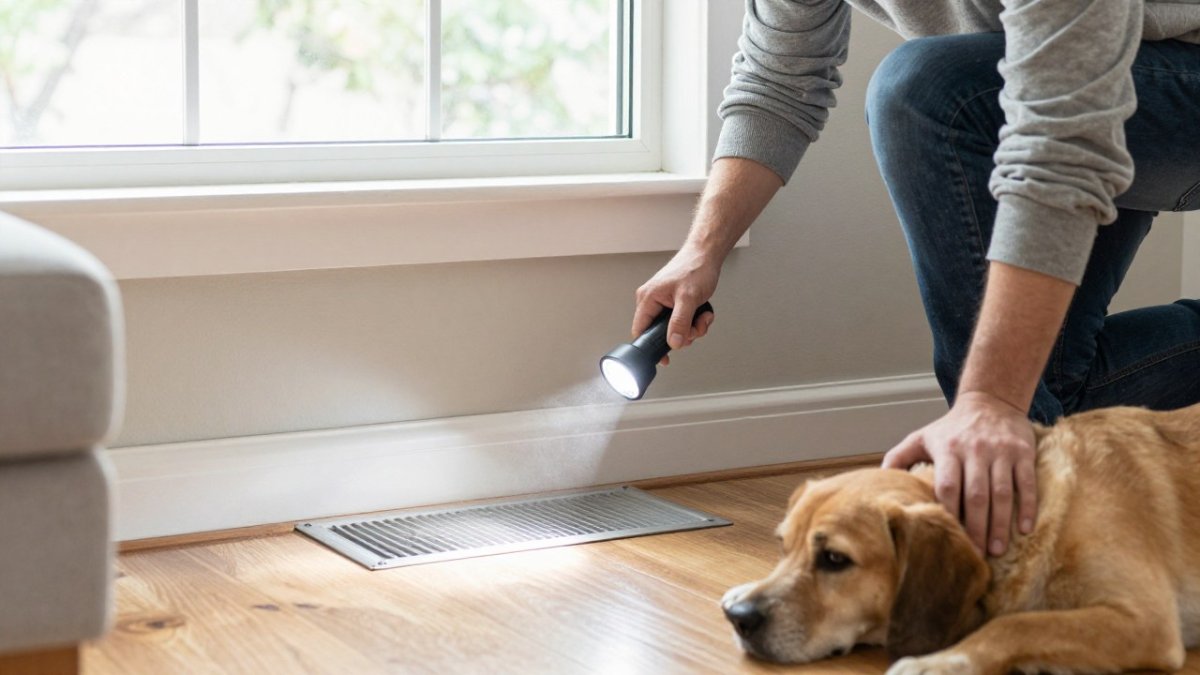
- Visible dust puffing from supply vents at startup
- Dust on vent covers or inside visible ducts
- Musty odors when the system runs
- Mold inside ducts or around vents
- Pests or droppings in the system
- Dust returning fast after cleaning
- New or worse allergy or asthma symptoms
How to tell ordinary dust from an HVAC or building problem
Ordinary dust spreads evenly and builds slowly. A building or HVAC problem looks different:
- Dust concentrated near supply vents. One or two rooms collecting dust faster points to the duct system or filter.
- Rapid buildup after a filter change. A filter loading in weeks means the system may be pulling outdoor or attic air.
- Dust returning within days of cleaning. This points to an active source, not a cleaning habit problem.
Toms River and Jersey Shore dust sources
Homes near the shore or a busy road can see faster dust buildup, so check filters more often.
If you see mold, pests, or heavy debris, call a professional. Our air duct cleaning service covers these problems.
How to Test Indoor Air Quality at Home and Plan Your Next Service
Start with simple checks. Look at your air filter first, a gray, clogged filter may be the real problem, and replacing it is cheap. Walk through the house noting dust, odors, or stuffiness, and keep a short log for a few weeks to spot patterns.
A step-by-step home dust audit
Use this room-by-room checklist to trace dust sources:
- Check the filter. Note the size and how long it's been in place. Loading in under a month suggests a source problem.
- Inspect supply and return vents. Dust concentrated at one vent points to that branch of the duct system.
- Walk the building envelope. Check doors, windows, and the attic hatch for gaps and drafts.
- Review fabrics and foot traffic. Carpets, upholstery, and curtains trap dust; shoes bring in sandy soil and road dust.
- Check ceiling fans and vents. Dust on blades gets redistributed every time they run.
Choosing and replacing HVAC filters
Match the filter to your system's airflow, a higher particle capture rating can restrict airflow if the system wasn't designed for it, so check the owner's manual or ask an HVAC professional before upgrading. Replace filters on the manufacturer's schedule, more often with pets, near the water, or with rapid buildup. Write the install date on the frame.
Measuring whether your changes work
Track results instead of guessing. Log filter condition and dusting frequency for four to six weeks. If dust returns faster, the source is still active; if buildup slows, your changes are working.
If issues continue, a professional indoor air quality test can measure what's actually in the air. Our air duct cleaning page explains what happens during a service, and is air duct cleaning really necessary? walks through the decision.
Plan your next service based on what you found. Clean ducts and good filters may mean you can wait; spotted problems mean schedule a cleaning sooner.
Use the table below to compare the filter, dust-audit and service-timing steps covered in this section.
| Step | What to do | Time or frequency |
|---|---|---|
| Check the filter | Note its size and how long it has been in place | Loading in under a month suggests a source problem |
| Inspect vents | Look for dust concentrated at one supply or return vent | During the room-by-room audit |
| Walk the building envelope | Check doors, windows and the attic hatch for gaps | During the room-by-room audit |
| Review fabrics and traffic | Note carpets, upholstery, curtains and shoes bringing in soil | During the room-by-room audit |
| Check ceiling fans | Look for dust on blades that gets redistributed | Each time the fans run |
| Replace filters | Follow the manufacturer's schedule | More often with pets, near water, or with rapid buildup |
| Track results | Log filter condition and dusting frequency | Four to six weeks |
Frequently Asked Questions
How often should you actually clean your air ducts?
Routine duct cleaning is generally tied to a specific problem, such as visible mold, pest debris or heavy dust blowing from the vents. Homes with pets, allergy sufferers or recent renovations may need cleaning sooner, and an inspection can show whether your system is due.
What are the signs that your air ducts need cleaning?
Look for visible dust or debris around supply and return vents, dust that returns quickly after cleaning, musty odors when the system runs, visible mold inside ducts or on vent covers, and rodent or insect activity. Dust clogging your HVAC filter faster than usual is another sign, because dirty ducts push more particles into the filter and make the system work harder.
Does air duct cleaning help reduce dust in your home?
Cleaning can reduce dust that is circulating from the ductwork, but the EPA notes that studies have not conclusively shown that duct cleaning reduces particle levels in homes. Regular filter changes, vacuuming and controlling outdoor air leaks usually have a larger effect on household dust. A professional inspection can confirm whether the ducts are actually the source.