 how-to
Why Dryers Take So Long to Dry and How to Fix It
Last Updated: October 25, 2026
Quick Summary
Dryers take so long to dry most often because lint buildup clogs the lint screen, exhaust vent, and ductwork, restricting airflow and forcing the heating element to work harder. A clean lint screen after every load, regular vent inspection, and professional cleaning once a year restore efficiency and prevent fire hazards.
- Lint buildup is the number-one reason dryers underperform and create a fire hazard.
- Most dryers finish a normal load in 30 to 45 minutes; heavy loads take 45 to 60 minutes.
- Heat-pump dryers normally run 60 to 90 minutes, which is not a fault.
- Clean the lint screen after every load and rinse the mesh monthly to remove fabric-softener film.
- Call a professional if the vent is longer than 15 feet, has multiple bends, or runs through walls.
Table of Contents
- Why Dryers Take So Long to Dry
- Dryer Vent Clogged Symptoms and What They Mean
- When Your Dryer Takes Multiple Cycles to Dry Clothes
- Understanding Average Dryer Drying Time
- How to Clean a Dryer Vent Safely
- When to Call a Professional for Dryer Vent Cleaning
- Schedule Your Professional Dryer Vent Inspection Today
- Frequently Asked Questions
Why Dryers Take So Long to Dry
A dryer that takes multiple cycles frustrates homeowners and wastes energy. The problem usually isn't the dryer itself, it's what's blocking airflow. Most people don't realize that why do dryers take so long to dry often comes down to simple maintenance you can fix yourself.
Many causes are preventable, and understanding what slows drying helps you decide whether to clean things yourself or call a professional.
The Most Common Culprits
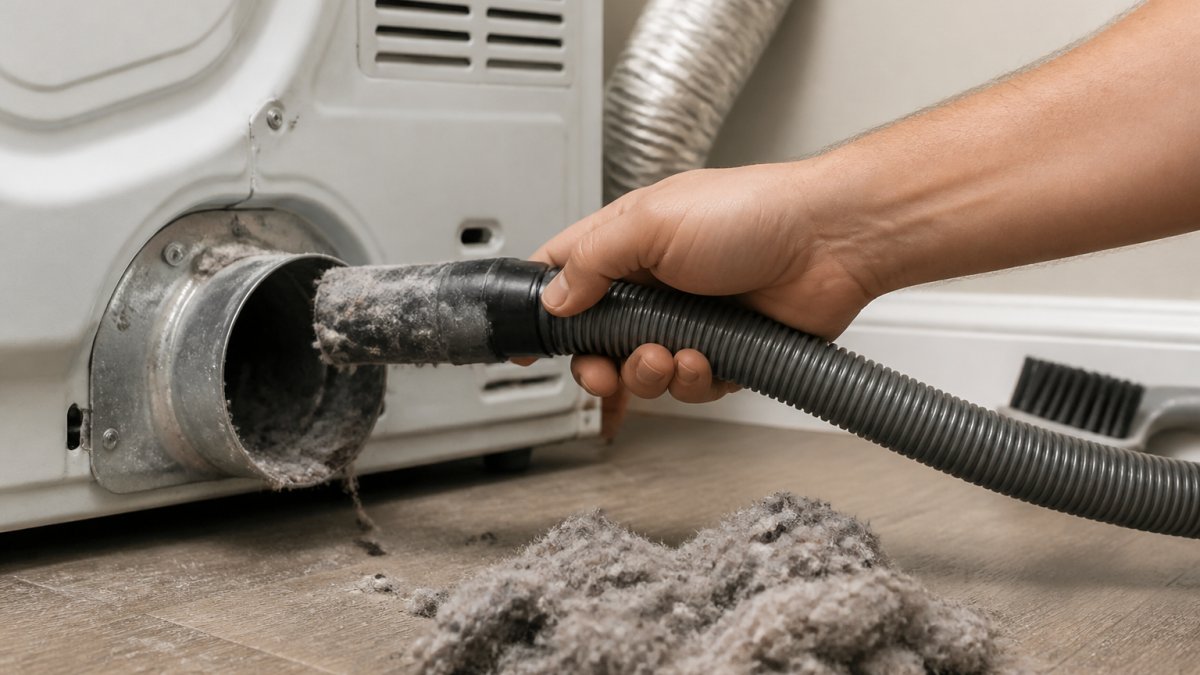
Lint buildup is the number-one reason dryers underperform. It clogs the lint screen, exhaust vent, and ductwork behind your dryer, reducing airflow and forcing the heating element to work harder.
Here's what happens:
- Lint screen fills with fibers after every load
- Air can't move freely through the drum
- Moisture stays trapped in clothes longer
Other frequent causes include overloading, poor ventilation, and blocked vents. Some dryers also struggle because the washer's spin cycle isn't removing enough water first.
Watch out: ignoring lint buildup creates a fire hazard. Lint is highly flammable. A clogged dryer vent can reach dangerous temperatures.
Dryer Vent Clogged Symptoms and What They Mean
A clogged dryer vent shows specific warning signs. Learn about the eight signs your dryer vent needs cleaning now to confirm whether your dryer is showing symptoms that require attention.
Clothes smell musty or mildewy. Trapped moisture lets mold and mildew develop as clothes dry slowly.
Lint appears around the dryer door. If lint escapes into the room instead of venting outside, the ductwork behind the dryer is likely blocked.
The vent hood flap doesn't open. Go outside and look at your dryer vent opening.
These symptoms mean airflow is restricted somewhere, clogged inside the house, blocked at the exit, or restricted by a bent duct hose.
When Your Dryer Takes Multiple Cycles to Dry Clothes
Running the dryer two or three times for one load signals a real problem. Diagnose in the right order, simplest, safest checks first, since most multi-cycle complaints trace back to airflow, not a failed heating element.
A safe diagnostic sequence
Work through these steps in order. Stop at the first one that reveals a problem.
- Check the load. Is the drum more than about two-thirds full? Overloading prevents tumbling and air circulation. Remove half and run a short timed cycle to see if drying improves.
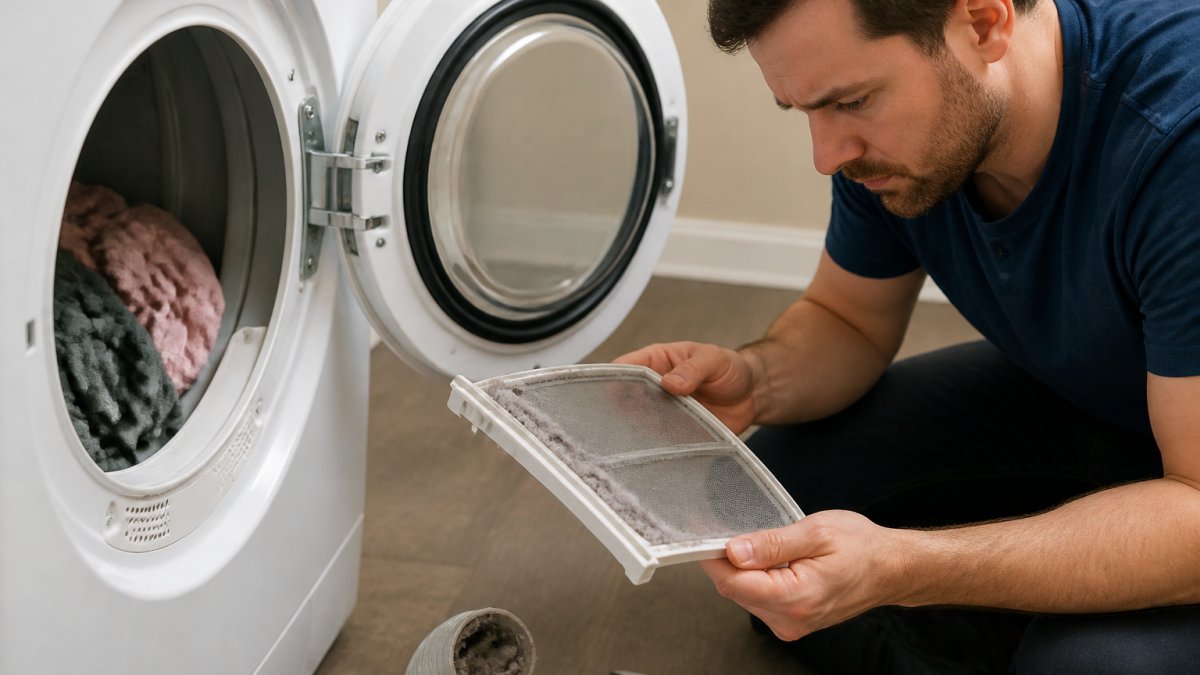
- Clean the lint screen. Remove lint by hand, then rinse the mesh monthly to clear fabric-softener film that hand-cleaning misses.
- Confirm the washer is spinning out water. A dripping-wet load always takes multiple cycles. If clothes are still soaked after the spin cycle, the washer may be the problem, not the dryer.
- Inspect the exterior vent hood. With the dryer running, go outside and watch the flap. It should open and stay open with strong airflow. A flap that stays closed or flutters weakly points to a blockage.
- Inspect the duct behind the dryer. Unplug it first, pull it out, disconnect the flexible duct, and look inside with a flashlight. Crushed, kinked, or lint-packed duct is a common culprit.
- Compare heat and airflow symptoms (see below) before calling for service.
Distinguishing airflow problems from heating failures
These causes produce different symptoms, and the distinction matters: one is a cleaning issue, the other a repair issue.
Airflow restriction symptoms:
- Clothes are warm and damp after a full cycle, not cold and wet
- The dryer cabinet feels unusually hot to the touch
- The exterior vent flap opens weakly or not at all
Heating failure symptoms:
- Clothes stay cold and wet after a full cycle
- The drum tumbles but never warms up
- The dryer runs but the exterior vent flap shows airflow with no heat
If airflow is restricted, clean the lint screen, duct, and vent hood. If heat is absent, stop there, gas and electric heating repairs involve line voltage, gas connections, and thermal fuses that are not DIY territory. Call a qualified appliance technician.
Why multiple cycles happen even when the lint screen is clean
The lint screen only catches part of the lint stream.
Overloading and undersized loads both cause multi-cycle drying: clothes need room to tumble through the airstream. A packed drum leaves the center damp; a nearly empty one lets clothes ball up.
If you have worked through the sequence and clothes still take multiple cycles, the next step is a professional vent inspection, the blockage is likely inside the wall or at a roof termination you cannot safely reach.
Understanding Average Dryer Drying Time
Most dryers finish a normal load in 30 to 45 minutes, heavy loads like towels and jeans in 45 to 60, and delicates in 20 to 30. Those numbers assume proper airflow, working heat, and a washer that spins out most of the water. If your dryer used to finish in 30 minutes and now needs 90, something has changed, and dryer type shapes both the normal time and the likely cause.
Normal times by dryer type
Electric dryers are the most common type and typically run 35 to 50 minutes for a normal load.
Gas dryers run roughly the same times as electric models, 30 to 45 minutes, because drum and airflow design are similar; the difference is the gas burner and igniter.
Heat-pump dryers run noticeably longer, often 60 to 90 minutes or more, because they dry at lower temperatures using a refrigerant cycle. This is normal, not a fault.
Sensor-dry vs. timed-dry: why the cycle ends when it does
Most modern dryers default to sensor dry, which uses moisture sensors, typically two metal strips inside the drum, to end the cycle when clothes are dry. Coated with fabric-softener residue or lint, sensors misread moisture and either end early (leaving clothes damp) or keep running.
If you suspect a sensor problem, clean the sensor strips inside the drum with a cloth and a little rubbing alcohol, and make sure clothes are actually contacting the sensors rather than balled up away from them.
Factors that change drying time
- Load size and fabric type, towels and denim hold more water and dry slower than synthetics and delicates
- Moisture content entering the dryer, a weak washer spin cycle adds 15 to 30 minutes
- Dryer age and condition, worn drum seals and blower wheels reduce airflow
A gradual increase in drying time over months points to lint accumulation. A sudden jump points to a shifted or disconnected duct, a failed heating component, or a sensor problem. Matching the symptom pattern to the dryer type is the fastest way to know whether to clean, adjust your habits, or call for service.
Normal drying times vary by dryer type and load, assuming proper airflow and a washer that spins out most water.
| Dryer Type | Normal Drying Time | Key Characteristic |
|---|---|---|
| Electric | 35 to 50 minutes | Most common; depends heavily on airflow |
| Gas | 30 to 45 minutes | Similar to electric; uses gas burner and igniter |
| Heat-pump | 60 to 90 minutes | Normal; dries at lower temperatures using refrigerant cycle |
| Normal load | 30 to 45 minutes | Assumes proper airflow and working heat |
| Heavy load (towels, jeans) | 45 to 60 minutes | Holds more water; dries slower |
| Delicates | 20 to 30 minutes | Lightest loads; shortest drying time |
How to Clean a Dryer Vent Safely
Cleaning your lint screen after every load is the easiest maintenance step.
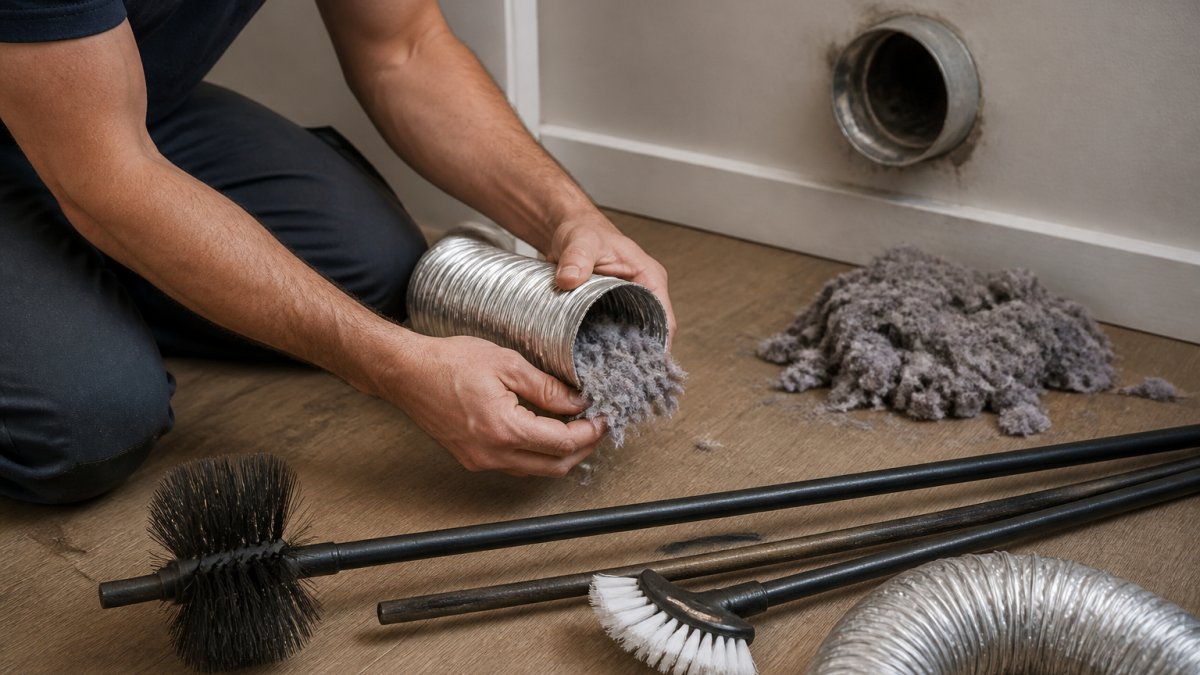
For the vent duct, you'll need a vent cleaning kit or a flexible brush designed for this task.
Step-by-step cleaning process:
- Unplug the dryer or turn off power at the breaker
- Pull the dryer away from the wall to access the vent duct
- Disconnect the duct hose from the back of the dryer
- Use a vent brush or flexible rod to push lint out of the duct
- Work from the dryer end toward the exterior vent opening
- Reconnect the hose and push the dryer back into place
- Plug in the dryer and test it with a short cycle
Check the exterior vent opening to make sure the flap opens freely and no lint blocks the opening.
Watch out: don't force a brush into a vent that feels stuck.
When to Call a Professional for Dryer Vent Cleaning
Some situations require professional help. If your vent runs through walls, attic space, or makes multiple turns, reaching all the lint buildup is difficult without specialized tools.
Call a professional if:
- The vent is longer than 15 feet
- The duct has multiple bends or goes through walls
- You've tried cleaning it yourself and clothes still take too long to dry
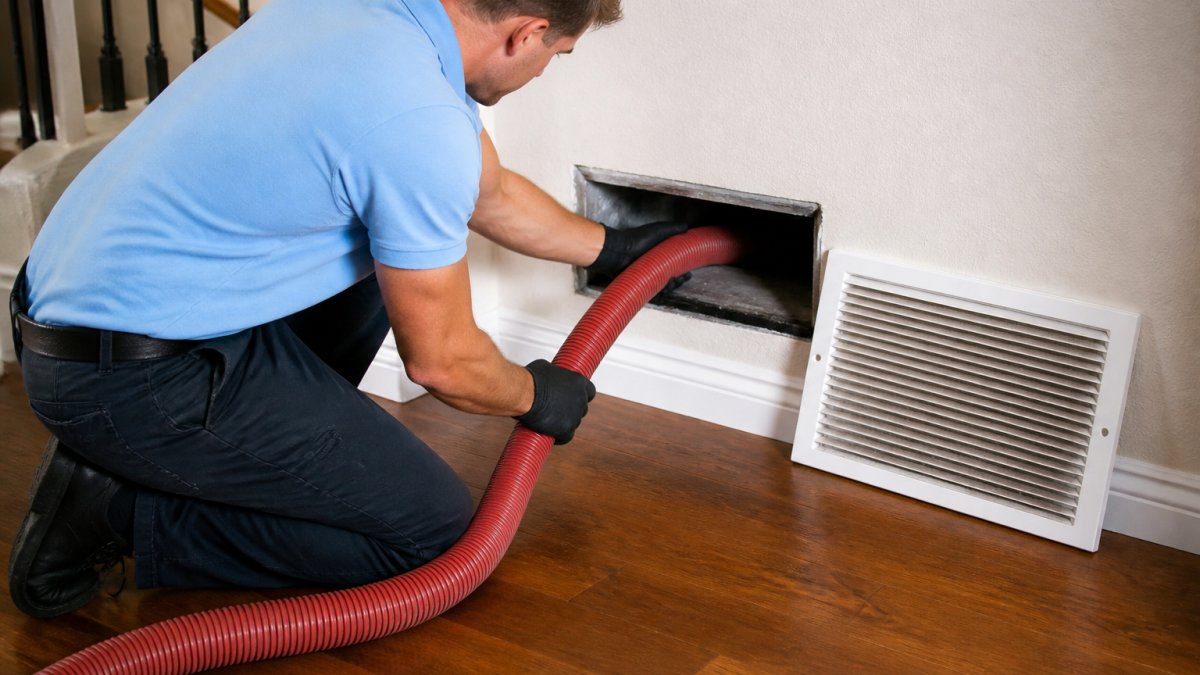
Professional cleaners use power equipment that removes lint far more completely than handheld brushes, and they inspect the entire system for damage, disconnected sections, or improper installation.
We use advanced cleaning methods to restore full airflow and improve drying performance.
Schedule Your Professional Dryer Vent Inspection Today
Extended drying time wastes energy and money, and creates a fire hazard that puts your home at risk.
A professional inspection takes the guesswork out of diagnosing why your dryer takes so long to dry.
The best approach: clean your lint screen after every load, inspect your vent opening monthly, and schedule professional cleaning once a year.
Contact Wilson Carpet & Air Duct Cleaning, LLC today to schedule your dryer vent inspection.
Frequently Asked Questions
What is the average drying time for clothes in a dryer?
Most standard drying cycles run 30 to 60 minutes, depending on load size, fabric type, and humidity. Delicate fabrics dry faster (20-30 minutes), while heavy items like towels and jeans may need 45-60 minutes. Sensor-dry cycles automatically stop when clothes reach the target moisture level, often finishing in 35-50 minutes. If your drying time consistently exceeds 60 minutes for a normal load, restricted airflow or a heating issue likely needs attention.
Can a clogged dryer vent make clothes take longer to dry?
Yes, a clogged dryer vent is one of the most common reasons dryers take so long to dry. Lint buildup blocks air circulation, forcing your dryer to work harder and run longer cycles. Even a partial blockage reduces airflow significantly, trapping moisture inside the drum. A fully restricted vent can extend drying time by 50% or more and creates a serious fire hazard. Regular vent cleaning restores airflow and drying performance.
How do I know if my dryer vent is clogged?
Watch for these dryer vent clogged symptoms: clothes stay damp after a full cycle, the dryer runs hot to the touch, lint accumulates around the dryer or vent opening, or you notice a burning smell. The vent hood flapper should open freely when the dryer runs; if it stays closed or opens weakly, blockage is likely. Feel the outside vent while the dryer runs, warm air should flow strongly. If airflow is weak or absent, your vent needs cleaning.
When should I call a professional to clean my dryer vent?
Call a professional if you notice extended drying times that don't improve after cleaning the lint screen, if the vent is long or has multiple bends, if you cannot safely access the vent yourself, or if you suspect a blockage deep inside the ductwork. Professional cleaning equipment reaches blockages that household tools cannot. Many fire safety experts recommend professional inspection and cleaning annually, especially for homes with longer vent runs or multiple bends in the ductwork.
Dryer vent problems don't solve themselves. Ignoring slow drying times leads to longer cycles, higher energy bills, and increased fire risk. Wilson Carpet & Air Duct Cleaning, LLC provides professional dryer vent cleaning and inspection to restore airflow, improve drying speed, and protect your home. Call us today to schedule your service and experience the difference a clean vent makes.