how-to
How to Clean Air Ducts Effectively Yourself
Last Updated: October 30, 2026
Quick Summary
To clean air ducts effectively yourself, turn off the HVAC system at the breaker, then remove vent covers and vacuum the grilles, register frames, and the first reachable stretch of duct behind each opening with a soft brush attachment. Clean vents and registers every six months, and call a professional for mold, moisture, pests, or buildup beyond your reach.
- Inspect vents and the air filter every six months and clean vent covers and registers at the same time.
- Turn off power at the breaker, not just the thermostat, before opening any register.
- Never spray water or cleaner into ductwork, because moisture inside a duct feeds mold.
- Use low suction and a soft brush on flex ducts, and light suction only on fiberboard.
- Book professional cleaning after remodeling, water damage, or a pest problem.
Table of Contents
- Step 1: Know When Your Ducts Actually Need Cleaning
- Step 2: Gather the Right Air Duct Cleaning Tools
- Step 3: How to Clean HVAC Vents and Registers
- Step 4: Vacuum Accessible Ductwork and Remove Debris
- How Often to Clean Air Ducts and What the Evidence Says
- Professional Air Duct Cleaning Methods and When to Call
- Frequently Asked Questions
Step 1: Know When Your Ducts Actually Need Cleaning
Most homeowners assume dirty ducts need cleaning. Environmental Protection Agency states plainly that duct cleaning has never been shown to prevent health problems, and a review of the scientific literature found inadequate evidence that cleaning improves airflow or cuts energy use.
So when does it matter? When there is visible trouble. The right approach is to look for a specific trigger, not a calendar date.
Signs of Dust Buildup and Blocked Airflow
Watch for these:
- Dust streaks around supply vents and return-air vents
- Visible dust or debris inside the duct interior
- Weak airflow from some rooms
If you spot moisture, mold, or rodent droppings, stop. That is a professional job, not a weekend project. If you are simply weighing whether cleaning is worthwhile, our guide on whether air duct cleaning is really necessary walks through the evidence. And if you are checking warning signs, signs your home's air system needs professional attention covers what to look for.
Step 2: Gather the Right Air Duct Cleaning Tools
The right air duct cleaning tools are simple. You do not need a truck full of equipment to clean vents and accessible ductwork. But the tools you choose should match the duct material and the system type, because metal, flexible, and fiberboard ducts respond differently to brushing and vacuuming.
Here is your starter kit:
| Tool | What It Does |
|---|---|
| Vacuum with hose | Pulls loose dust from registers and reachable duct |
| Soft brush attachment | Loosens dust stuck to grilles and duct walls without tearing flexible duct |
| Screwdriver | Removes vent covers and register screws |
| Microfiber cloths | Wipe down vent covers and frames |
| Damp cloth | Traps fine dust instead of spreading it |
| Flashlight | Lets you inspect inside the duct interior |
| Air filter | Replace a clogged filter while you are at it |
Safety Gear and HVAC Precautions
Turn the system off at the thermostat before you start. Better yet, switch off the breaker that feeds the air handler so the blower cannot kick on while your hands are near the vent opening.
One more precaution: never spray water or cleaner into ductwork. Moisture inside a duct feeds mold. If you see moisture, mold, or rodent droppings, stop. That is a professional job, not a weekend project.
Match the Method to the Duct Material
Not every duct can take the same treatment. Use this as a quick reference before you start:
- Sheet metal ducts: The most forgiving. A soft brush attachment and a vacuum hose are fine. Avoid sharp tools that can scratch the galvanized coating.
- Flexible (flex) ducts: The inner liner tears easily. Use low suction, a soft brush, and never force the hose around a bend. If the liner is already torn or collapsed, do not clean it yourself, call a pro.
- Fiberboard ducts: The surface is fragile and can crumble if scrubbed. Use light suction only and avoid brushing. If the board is damaged or damp, replacement is usually the better path.
System-Specific Cautions
- Central HVAC: Shut off power at the breaker, not just the thermostat. Confirm the blower is stopped before you open any register.
- Heat-pump systems: The air handler may include electric resistance heat strips. Treat the cabinet as live electrical equipment and keep tools and hands clear of the wiring compartment.
- Any system with a humidifier or dehumidifier tied into the ductwork: Do not introduce water or cleaner near those components. Moisture control is the whole point of that equipment.
Step 3: How to Clean HVAC Vents and Registers
Cleaning HVAC vents and registers is the part most homeowners can do well. It is also where you see the fastest dust reduction.

Work through it in order:
- Turn off the HVAC system.
- Remove each vent cover and floor register with a screwdriver.
- Vacuum the grille on both sides with the brush attachment.
- Wipe down vent covers with a damp microfiber cloth.
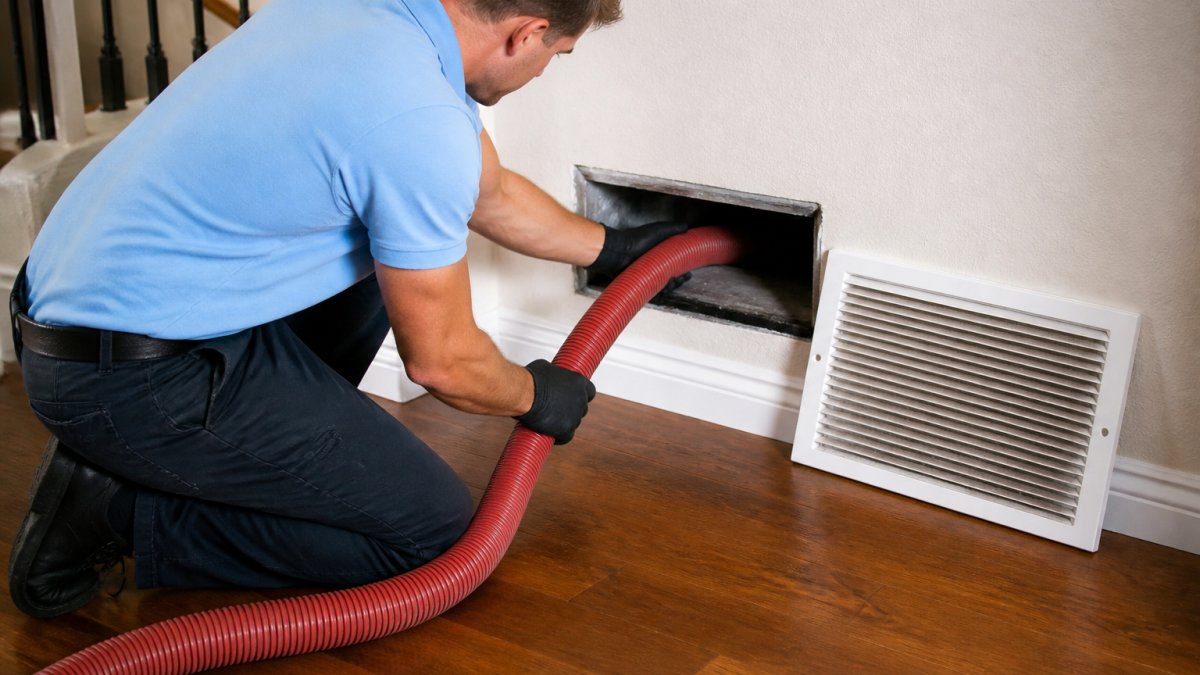
- Vacuum inside the vent opening as far as the hose reaches.
- Reinstall the covers and check the return grille too.
Do this every six months, or sooner if you see dust buildup return.
Step 4: Vacuum Accessible Ductwork and Remove Debris
Vacuuming accessible ductwork removes the dust and debris you can actually reach. That means the first stretch behind each register, not the whole system. Feed the vacuum hose into the duct interior and work it around the sides.
Work one register at a time so you do not stir dust back into rooms you already cleaned. Keep the HVAC off until every cover is back in place.
What DIY Cleaning Cannot Reach
Here is the honest limit. A shop vacuum cannot reach the trunk lines, the air handler, or the long runs buried in walls and ceilings. The EPA recommends well-controlled brushing with contact vacuum cleaning to dislodge particles, and that takes equipment most homes do not own. DIY cleaning also cannot safely handle mold, pest contamination, or water damage. Pushing air around contaminated ductwork can spread the problem.
Post-Cleaning Verification Checklist
After the work is done, verify it before you call the job finished:
- Registers and grilles: Every cover is reinstalled, screws are snug, and no dust streaks remain on the frame or surrounding drywall.
- Filter: A new or freshly cleaned filter is seated correctly with the airflow arrow pointing toward the air handler.
- Airflow: Turn the system back on and check that each room gets steady airflow. Weak airflow in one room can mean a damper is closed or a duct is disconnected.
When Contamination or Moisture Needs Diagnosis
Persistent odors, pest activity, or suspected mold are not cleaning problems, they are moisture or contamination problems. Cleaning the duct without finding the source usually means the problem comes back. Look for the underlying cause: a leaking roof or plumbing line, condensation on cold duct surfaces, a clogged condensate drain, or a return duct pulling air from a damp crawlspace.
How Often to Clean Air Ducts and What the Evidence Says
There is no universal schedule. The honest answer to how often to clean air ducts is: when conditions call for it, not on a fixed clock.
The EPA treats cleaning as conditional rather than routine. Industry guidance from the National Air Duct Cleaners Association on proper cleaning methods centers on source removal, meaning physically removing contamination rather than masking it.
A practical rule we give homeowners:
- Inspect vents and the air filter every six months
- Clean vent covers and registers at the same time
- Book professional cleaning after remodeling, water damage, or a pest problem
- Call sooner if airflow drops or odors appear
Researchers cited by Facilities Dive on routine HVAC cleaning note that proper HVAC cleaning can support energy efficiency, ventilation, and indoor air quality.
Professional Air Duct Cleaning Methods and When to Call
Professional air duct cleaning methods go further than a vacuum hose.
A PubMed-indexed study of HVAC duct cleaning procedures compared conventional vacuum contact cleaning with compressed-air air-sweep methods, which shows the range of approaches in use.
Call a pro when you see:
- Mold or musty odors inside ductwork
- Water damage or standing moisture
- Rodent droppings or dead pests
- Debris clogging the air handler
Ask for a clear scope of work before any job begins.
Frequently Asked Questions
Can you clean air ducts without professional equipment?
You can clean vent covers, floor registers, and the duct openings you can reach with a vacuum hose and brush attachment. That handles surface dust and debris. What you cannot do is reach deep into the ductwork or the air handler, where contamination collects. Thorough duct cleaning requires equipment most homeowners do not own. For anything past the first few feet of accessible ductwork, a professional assessment is the safer call.
How often should air ducts be cleaned?
There is no fixed schedule that fits every home. The EPA frames duct cleaning as conditional rather than routine, meaning you clean when there is a reason, not on a calendar. Practical triggers include visible dust buildup, recent renovation, water damage, pest activity, or a household member with allergies. Inspect your vents every six months and clean when you see real buildup.
Can cleaning air ducts improve indoor air quality?
The honest answer is that cleaning removes the source of contamination, which supports better air quality, but it is not a cure-all. Pair it with regular air filter replacement and source control for the best results.
When should you hire a professional air duct cleaner?
Call a professional when contamination is visible beyond the vent openings, when you have had water damage or pest activity in the ductwork, or when your HVAC system has never been cleaned. If your HVAC technician says the ducts look fine, ask for a second opinion focused specifically on duct interiors rather than the exterior unit.
Dirty ducts, weak airflow, and musty smells rarely fix themselves. Wilson Carpet & Air Duct Cleaning, LLC offers advanced air duct cleaning and disinfecting methods, indoor air quality testing, and high-quality air filter installation to tackle what a shop vacuum cannot reach. Call us today to schedule an inspection and breathe easier.